
For free help with your job search, call (800) 776-8383.

It's 2 a.m. and your candidate is checking email. Will yours be read?

"Some of us may get an hour to review the last three days of email." 

That's what fourth-year med student James Mason told the PracticeLink team recently. He was one participant in the physician panel we heard from during our annual company meeting a couple of weeks ago.

He continued, "If your email literally has the terms that are useful to us, I might [find it in a] search. If you abbreviate a state, I may miss it. [You have to] have enough searchable terms when I have 200 outstanding emails." 

His comments shed light on the way some time-strapped med students, residents and practicing physicians approach their inboxes: triage-style. Emails don't get dealt with in the order they arrive. Rather, only the messages with the most pressing contents get tended to. The rest must wait.

So how can you ensure your messages get seen and attended to? Here are a few tips I gleaned from the panel's discussion.

Read More

Why Post ALL Of Your Jobs?

In last week’s inTraining webinar, Would You Apply to Your Job Posting, we covered tips on creating quality job postings to attract quality candidates. You, the physician recruiter, have so much impact on your organization. You impact the kind of physicians you hire, awareness of your employer brand and revenue to your organization, just to name a few. Beyond working hard to create inspiring job postings, what else can you do to get your jobs seen? 

Read More

PracticeLink’s Physician Recruitment Index

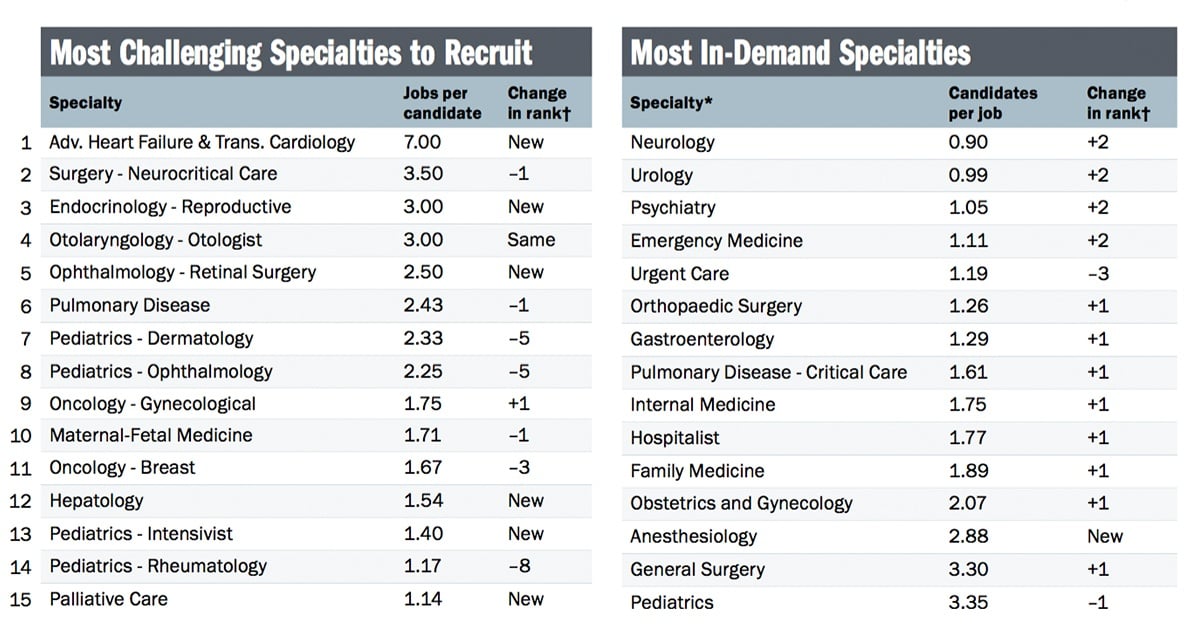
Wondering what to expect as you recruit for different specialties? The PracticeLink Physician Recruitment Index is an indication of the relative ease or difficulty of recruitment for various specialties based on supply and demand information gathered by the PracticeLink system quarterly. The larger the “Jobs per candidate” number, the more difficult the search.

Read More

Why physician recruiters should still rely on phone calls

We live in an increasingly digital society. Fifteen years ago we used desktop computers, landlines and fax machines to accomplish what takes only a smartphone today. Email has largely replaced snail mail, and texting has largely replaced phone calls. Technology makes everything more convenient, but it sometimes comes at the cost of quality human interaction.

Read More
New call-to-action

Recent Posts

Don't miss the latest insights!