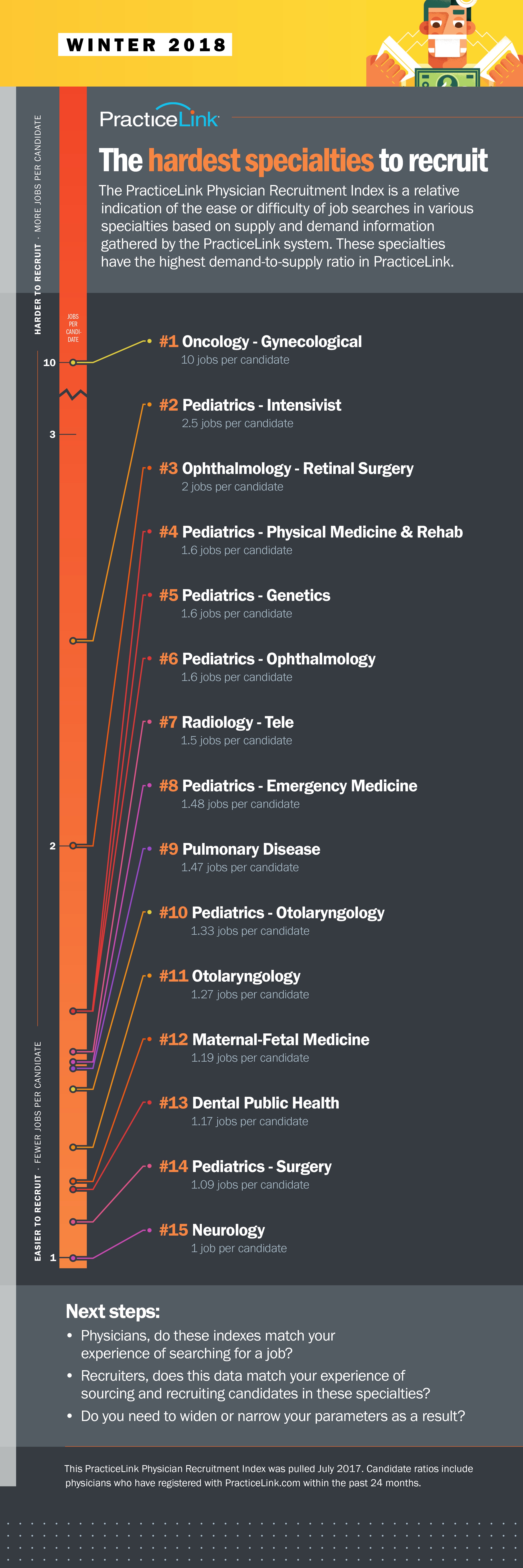
The results are in for the latest PracticeLink Physician Recruitment Index, a quarterly analysis of the medical specialties that are the most challenging to recruit and the most in demand.


The results are in for the latest PracticeLink Physician Recruitment Index, a quarterly analysis of the medical specialties that are the most challenging to recruit and the most in demand.

College football season is upon us, and with it comes a full breadth of fandom. I think you know what I mean—there are the fans, and then there are the FANS. There are those with a team T-shirt or two, and there are those who don’t need a T-shirt … because they paint their bare torsos in school colors. They may also don a wig and a foam finger.

You need to find a physician and fast, but you don’t have an enormous recruitment budget. You’re in the ultimate Catch-22 situation. Every day that you don’t fill that physician vacancy, your organization bleeds money...but you can’t spend anywhere near the amount you're losing to find the physician you need.
Frustrating, isn’t it? There are some things you can do right now.

Physician recruiters know better than anyone that a candidate’s job search isn’t just about the money. There’s community fit, practice settings, and how the job fits into the candidate’s vision of his or her future. But though it’s not the only factor, physician salaries understandably play a large role in any candidate’s career decisions.
But how are physician recruiters (not to mention physician job-seekers) supposed to know what comprises a fair compensation plan?
According to the Association of Staff Physician Recruiters (ASPR) 2014 In-House Physician Recruitment Processes Report, the reports from MGMA, Sullivan-Cotter and AMGA are in-house recruiters’ most frequently used resources for physician compensation.
Here’s a closer look at the resources available.